
What babies, boundaries, and brains can teach us about learning – and how our systems are still missing the point.
The other day, a friend made an offhand, situationally perfect comment that stuck with me:
“Baby playpens are kind of weird when you think about it.”
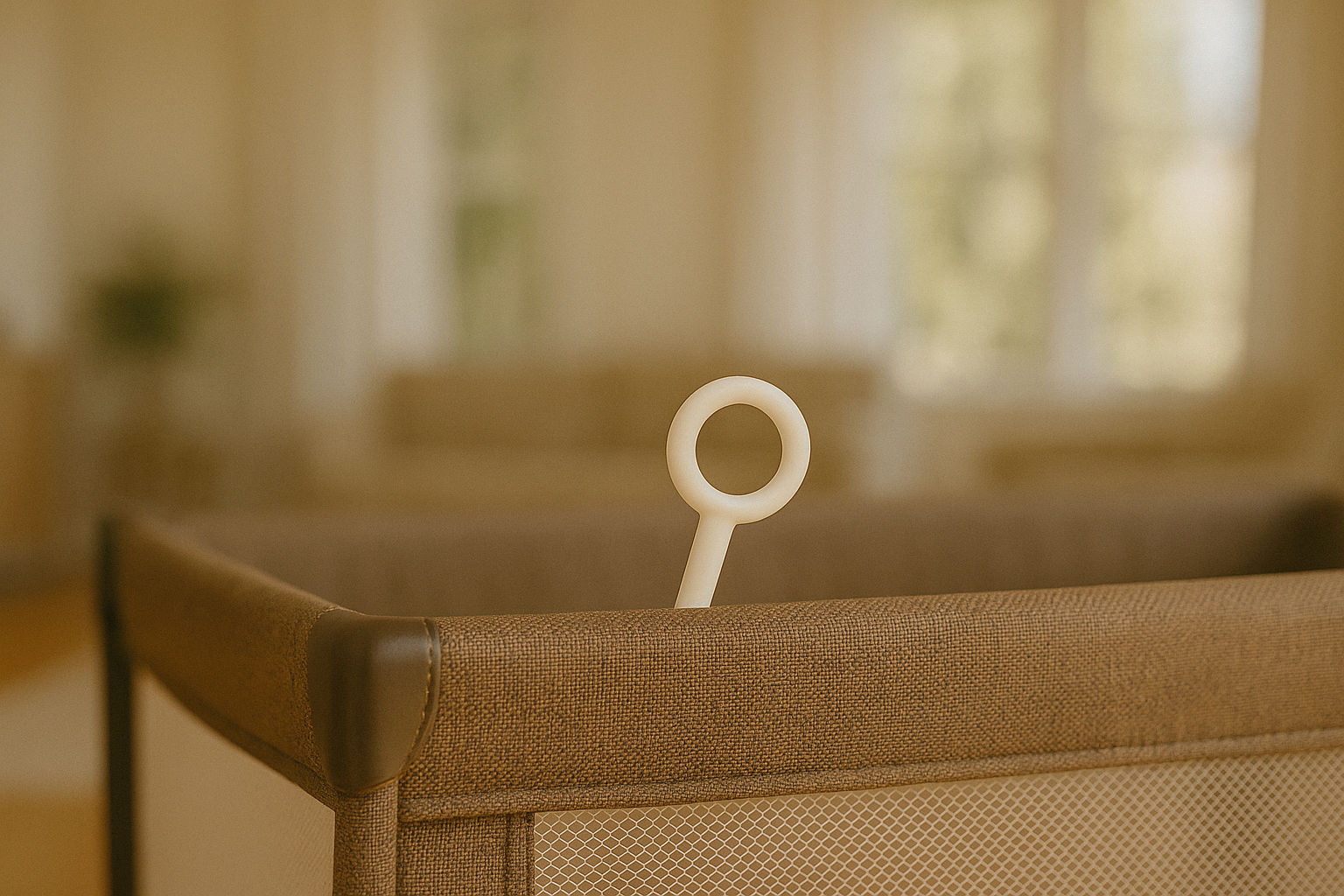
We were standing in front of one of those sleek, high-end models – wooden frame, designer mesh sides, collapsible structure. The kind you’d find on a minimalist parenting blog, all soft earth tones.
I laughed and added,
“Yeah. I mean, it’s very on-brand for the ideal.”
Now, for the record: I do not have kids. That said, I mostly see playpens as containment devices. I’ve had puppies, though – so… close?
And while I’m not a child development expert, I am deeply interested in what these kinds of environments represent – especially when you zoom out.
Because what is a playpen, really, if not a physical representation of how many of our systems approach development and overall growth, both individually and collectively?
We create acceptable paths. Layer boundary on top of boundary – then wonder why someone isn’t progressing the way we expected.
But we’re not going to deep-dive into playpens, really. We’re setting ourselves up to talk about how messy, nonlinear, and beautifully complex human growth really is – and even more so, how rarely our systems are designed to make space for that.
There’s No Such Thing as a Typical Path
Lately, I’ve been thinking a lot about how we define “normal” growth, “typical” brains, and “standard” progress. When I finished reading The End of Average by Todd Rose, I single-handedly raised my fist to combat average – though realistically, it’s been on my trajectory for some time.
(Side note: if you haven’t, I suggest reading it. It’s excellent.)
Because when you take a step back, the truth is really all around us: there’s no such thing as a typical path. And maybe there’s no such thing as a typical person. I don’t really think there is.
From a belonging standpoint, it’s our individual experience within a system that influences whether we feel that sense of belonging.
That experience is shaped by quite literally, so many things – genetics, culture, economic opportunity, cognitive capacity, emotional intelligence, environmental factors, past experiences, and hundreds (if not thousands) of other variables.
There’s a word I came across recently that speaks directly to that idea. But I’ll come back to it.
First, let’s talk about scootching.
What the Research Says (and Why It Matters)
Her comment got me thinking about a breakthrough moment in developmental science – one I first read about in The End of Average.
Researchers began shifting their focus away from what the “average” infant does and instead started studying how individual infants learn to move.
In some cultures, like parts of Papua New Guinea, babies are held more often – and when placed on the ground, they tend to scootch instead of crawl. It’s a way to avoid disease and parasites. It makes sense.
So while scootching becomes their primary mode of movement, it has no significant developmental disadvantage compared to crawling – it’s just different. Adapted to the environment and shaped by context.
It’s a simple shift in perspective, but one with big implications.
When we stop designing for the average and start noticing individual patterns, we’re forced to question the assumptions we’ve made about what growth should look like.
Yet for many parts of our world, we continue to build systems around those assumptions.
Think standardized testing, personality assessments, and those once-a-year performance evaluations your supervisor rushed to complete (even with ChatGPT).
More than anything, it reminds us that the environment and culture—represented through large and small systems—shape the way we move, learn, and develop.
Learning and Development Happens Everywhere
At its core, this is about human growth – but one area we experience constantly is how we learn and develop skills.
When people hear the phrase “learning and development,” they often picture a classroom or corporate training. But real learning is way bigger than that.
It happens when a team figures out how to work together after a setback.
When a parent changes the way they show up for their kid.
When someone teaches themselves a skill out of necessity.
When leadership comes from stepping up at the right moment.
Learning and growth happen everywhere – in homes, neighborhoods, interactive courses, classrooms, and break rooms. But the systems we build to support that growth often assume it should look one way: linear, trackable, predictable.
It might look efficient on paper, but it rarely works, or is equally as efficient, at the individual level.
And while there’s nothing inherently wrong with standardization (though, I think many could agree it has gone too far), if that’s the only way to achieve success, we risk losing our natural strengths, wasting energy, and masking our uniqueness to fit the mold.
And just like not every baby crawls before walking, not every adult follows a step-by-step progression.
Some scootch. Some stall. Some leap sideways. Some – if you’re in a cartoon – bounce into a superhero.
And that’s still growth.
The Systems That Make Our Adult Playpen
The more I thought about playpens, the more I started seeing adult versions of them in all kinds of systems – especially in education, leadership, and workplace design.
We build rigid structures that assume everyone moves at the same pace, in the same way, toward the same goal. It’s not just a physical boundary. It’s the presence of that boundary that quietly says, “Stay where you are.”
But that’s not how humans grow.
Growth happens in context—through relationships, constraints, personal interests, opportunities, and the signals we pick up from our environment.
When those environments are too tightly controlled or only reward one kind of movement, we don’t just limit what’s possible – we ultimately limit belonging.
And that’s where complexity starts to matter. Specifically, we as individuals are far too complex to be put in a box—physical or metaphorical.
In all seriousness, when someone doesn’t move in the “right” direction—when they scootch instead of crawl, or leap sideways instead of climbing a ladder – they’re often seen as off-track.
But what if the issue isn’t the movement? What if it’s the path we’ve declared “normal”?
That’s what brought me to this thought.
Enter Neurocomplexity
This is where that word I mentioned earlier comes in: neurocomplexity.
Coined in 2023 by Lindsey Mackereth, neurocomplexity offers a more expansive, honest way of understanding how our brains actually work.
It doesn’t just refer to individual traits or diagnoses like ADHD or autism – it looks at how multiple traits, experiences, and needs interact in layered, dynamic ways.
It’s not additive – it’s multiplicative. Think: n + n = n³—a dynamic system shaped by interaction, not isolation.
It also brings in sensory processing, creativity, chronic health, intuition, burnout, and more.
The point is – we’re complex. Our minds are shaped by context, and our ways of thinking and adapting don’t fit neatly into standardized boxes.
What I appreciate most about the neurocomplexity lens is that it pushes us away from rigid identities and diagnostic binaries.
It reminds us that the traits we call “gifts” in one setting can look like “deficits” in another and that much of this depends on how resourced, supported, or burned out a person is at any given moment.
Neurocomplexity invites us to stop measuring people by isolated traits and start understanding them as dynamic systems. Traits that look like deficits in one environment may be gifts in another. The difference? How well the system fits the human.
That said, I also find myself pausing at the phrase I’ve seen used: “a neurocomplex individual.” Even though it’s meant to broaden the conversation, it still starts to sound like another identity category. Another mental box.
What if instead of defining some people as neurocomplex, we started from the assumption that everyone is?
That complexity isn’t a subset – it’s a human baseline. In other words, when complexity becomes the baseline, we naturally value designs that are adaptive and fluid.
Maybe the shift we need isn’t just new language for the individual. Maybe it’s a new expectation for the system.
That’s why the image of scootching stuck with me. Crawling, scootching, or skipping both and just shimmying your way to walking – that’s what makes the individual journey matter. It’s doing what works for your body in your environment, even if it looks different from what some will call “normal.”
When you start to see the world through that lens, it becomes clear: There is no typical brain. Just many ways of being human.
Designing for Belonging in a System That Expects Difference
Now, if you’re wondering whether you should get a playpen for your child – please, don’t let that be the key takeaway from this post.
The point isn’t to throw out the playpen (for kids, toddlers, adults, or puppies).
It’s to recognize the purpose of boundaries we place – and then pause and ask:
- Who is this space or experience designed for?
- What kind of movement does it allow?
- Does it evolve with the people inside it?
- Are the expectations supporting growth – or limiting it?
- How does it foster a healthy, internal sense of belonging for the people within it?
Whether it’s leadership, education, parenting, or policy – belonging begins when we question the invisible assumptions baked into our systems. And when we choose to design in ways that honor the many ways humans grow – even the scootchers.
Because truthfully?
There isn’t just one way to crawl. There’s no such thing as typical. And that matters deeply when it comes to how we learn.
Human development isn’t linear. Brains don’t all take in the world the same way.
Some of us learn by doing. Some by listening. Some by moving.
Some by struggling and trying again.
Some by pausing, retreating, and returning on our own terms.
Our nervous systems, our attention patterns, our ways of making meaning – none of it is one-size-fits-all.
And yet so many of our systems – classrooms, performance reviews, lesson plans, even well-intentioned learning tools – are built around a narrow idea of what growth is supposed to look like.
We need systems that are designed not just to accommodate those differences, but to expect them. To adapt to them. To support the way people actually move, think, process, and grow.
That doesn’t mean erasing identity. In fact, it means the opposite: designing systems where identity is safe to bring forward and accepted naturally – not something people have to justify just to be understood or accommodated for.
It means holding space for individuality, and building learning environments that bend, flex, and shift – so people aren’t the only ones doing the adapting.
Because belonging isn’t just about being let in. It’s about knowing the space was built with you in mind: your body, your brain, your way of making sense of the world.
That’s one part of what I’m exploring through this new blog Organized Belonging:
Not fitting people into systems, but understanding and designing systems that fit people at every scale.